
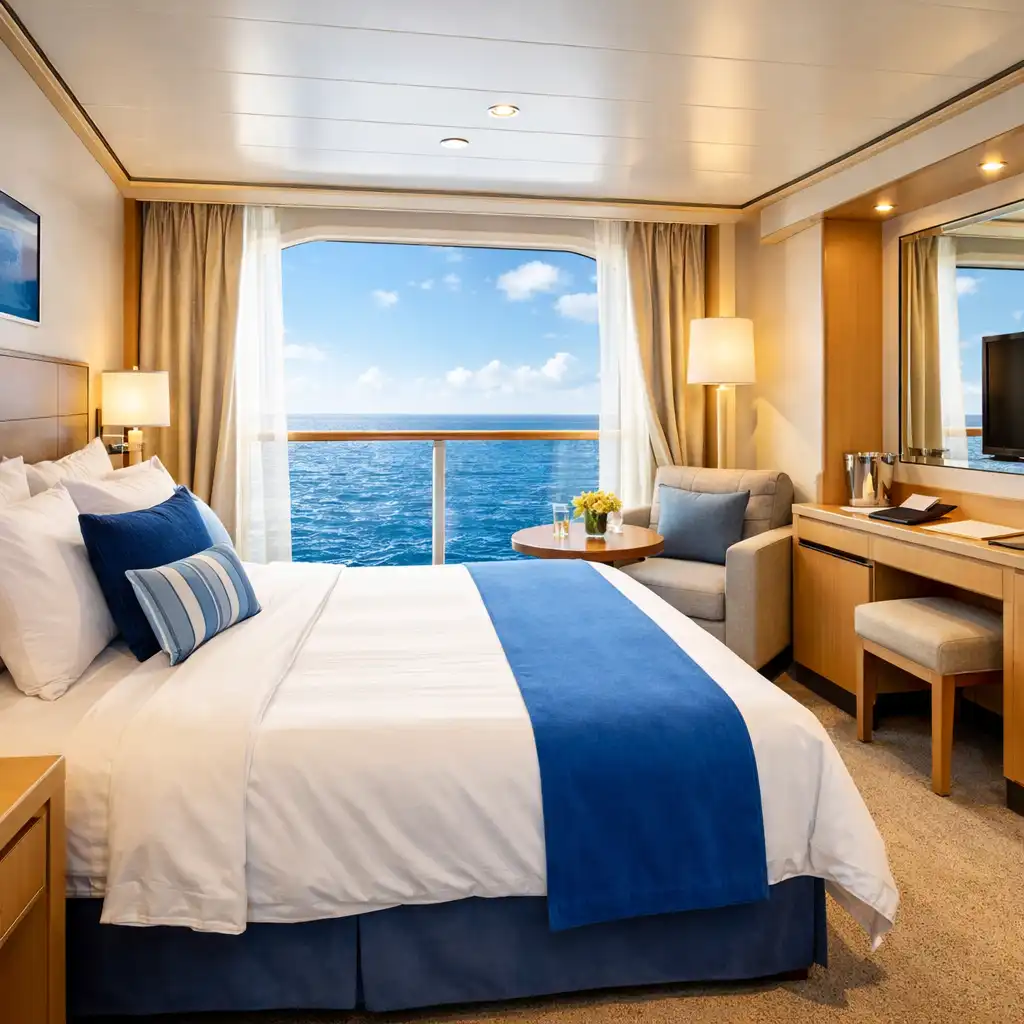
Bright cruise ship cabin with a large ocean-view window, neatly made bed, and modern furniture

Cabin Guides

Find Your Perfect Cabin at Sea

A practical guide to cruise ship cabins, from cozy interiors to expansive suites, helping you choose the right stateroom for your next voyage.

  • Understand the differences between cabin categories.
  • Learn how location, size, and amenities affect your cruise experience.
  • Get tips for making the most of your cabin space.
Explore Cabin Types

Cabin Categories

Introduction to Cabin Categories

Cruise ship cabins fall into four broad categories, each with its own balance of price, space, natural light, and outdoor access. Understanding these differences is the first step toward a comfortable voyage.

Interior Cabins

The most affordable option, interior cabins have no windows and are ideal for travellers who spend most of their time exploring the ship.

  • Typically smaller, around 150-200 square feet.
  • No natural light, but modern ships often use virtual windows or ambient lighting.
  • Best for budget-conscious travellers or those who only use the cabin for sleeping.
Oceanview Cabins

Oceanview cabins offer a window or porthole with a view of the sea, providing natural light without the cost of a balcony.

  • Windows may be large picture windows or smaller portholes.
  • Often slightly larger than interior cabins.
  • A good middle-ground for those who want a view but don't need outdoor space.

Balcony Cabins

Balcony cabins include a private outdoor space, allowing you to enjoy fresh air and ocean views from your own veranda.

  • Balcony sizes vary but usually fit a small table and chairs.
  • Great for scenic cruises or enjoying morning coffee.
  • Consider location: lower decks may have obstructed views.

Suites

Suites offer the most space and luxury, often with separate living areas, larger balconies, and exclusive perks.

  • Can range from junior suites to multi-room penthouses.
  • May include butler service, priority boarding, and access to exclusive lounges.
  • Best for special occasions or travellers seeking extra comfort.

Location Matters

Choosing the Right Cabin Location

Where your cabin sits on the ship can affect motion, noise, and convenience. A little planning with the deck map can make a big difference to your comfort.

Motion and Seasickness

Cabins on lower decks and near the ship's centre experience less motion, making them ideal for travellers prone to seasickness.

  • Midship cabins are the most stable.
  • Higher decks and forward/aft cabins feel more movement.
  • If you're concerned about motion, choose a lower, central cabin.

Noise Considerations

Cabins near elevators, stairwells, or entertainment venues may be noisier. Consider what's above and below your cabin.

  • Avoid cabins under pool decks or nightclubs.
  • Cabins between other passenger decks are quieter.
  • Check deck plans to see what's adjacent.

View and Accessibility

Consider whether you want a view, easy access to certain facilities, or proximity to elevators for mobility.

  • Balcony cabins offer private outdoor space.
  • Some cabins are designed for accessibility with wider doors and roll-in showers.
  • If you have mobility concerns, choose a cabin near elevators.

At a Glance

Cabin Comparison Table

Use this quick reference to compare interior, oceanview, balcony, and suite cabins across key factors. Sizes are approximate and vary by ship.

Comparison of cabin categories by size, light, outdoor space, and cost
Factor Interior Oceanview Balcony Suite
Typical Size 150-200 sq ft 180-220 sq ft 200-250 sq ft 300+ sq ft
Natural Light No Yes Yes Yes
Outdoor Space No No Private balcony Larger balcony
Relative Cost Low Medium Medium-high High
Best For Budget travellers Natural light lovers Outdoor relaxation Space and luxury

What's Included

Cabin Amenities and Features

Amenities vary by cruise line and ship, but most cabins include a core set of essentials. Higher categories add thoughtful extras that can make a voyage feel more comfortable.

Standard Amenities

Most cruise cabins include a bed, private bathroom, storage, a small desk or vanity, and a TV or interactive screen.

  • Bathrooms typically have a shower, sink, and toilet.
  • Storage includes closets, drawers, and under-bed space.
  • TVs often provide ship information, movies, and account access.

Upgraded Amenities

Higher category cabins may include minibars, bathrobes, upgraded toiletries, and priority services.

  • Suites often have separate living areas and larger bathrooms.
  • Some cabins offer coffee makers or mini-fridges.
  • Balcony cabins include outdoor furniture.

Space and Flow

Cabin Size and Layout

Square footage tells only part of the story. A well-designed layout can make a compact cabin feel surprisingly comfortable.

Understanding Square Footage

Cabin sizes vary widely, from compact interiors to spacious suites. Knowing the square footage helps set expectations.

  • Interior cabins: 150-200 sq ft.
  • Oceanview: 180-220 sq ft.
  • Balcony: 200-250 sq ft (including balcony).
  • Suites: 300+ sq ft.

Layout Considerations

Efficient layouts maximize storage and living space. Look for cabins with smart storage solutions and a comfortable flow.

  • Some cabins have split bathrooms (sink separate from shower/toilet).
  • Consider bed configuration: twin or queen.
  • Balcony cabins may have sliding or French doors.
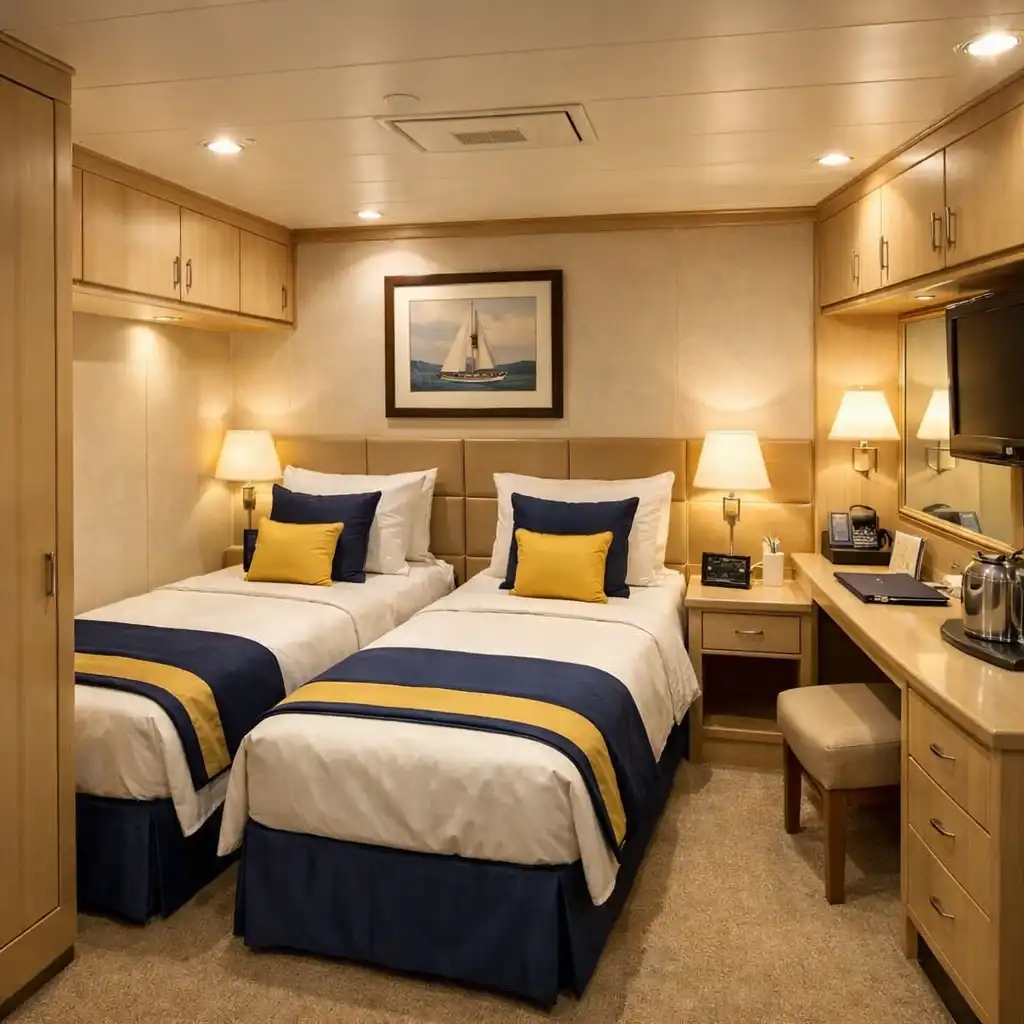
Cozy cruise ship interior cabin with twin beds, compact desk, and storage cabinets
Compact interior cabin with efficient storage and soft ambient lighting

Inclusive Travel

Accessibility and Special Needs

Most cruise ships offer accessible cabins and services for travellers with disabilities or mobility needs. Planning ahead helps ensure a smooth and comfortable voyage.

Accessible Cabin Features

Accessible cabins are designed with wider doorways, roll-in showers, grab bars, and lower fixtures to accommodate wheelchairs and mobility aids.

  • Available in various categories, but book early as they are limited.
  • Features may include visual alarms and accessible balconies.
  • Contact the cruise line to discuss specific needs.

Planning Ahead

If you have special needs, communicate them at booking and confirm arrangements before sailing.

  • Provide details about mobility equipment, service animals, or medical needs.
  • Some cruise lines offer assistance with embarkation and disembarkation.
  • Check deck plans for accessible routes.

Pack Smart

Packing for Your Cabin

Cabin storage is limited, so packing efficiently can make your stateroom feel more spacious and organised.

Essential Items

Pack smart to maximize limited cabin space and ensure comfort.

  • Magnetic hooks for walls (most cabin walls are metal).
  • Over-the-door organizer for toiletries and small items.
  • Power strip (non-surge protected) for extra outlets.
  • Night light for interior cabins.

What to Leave Behind

Avoid overpacking and leave prohibited items at home.

  • Irons and steamers are often prohibited due to fire risk.
  • Check cruise line policies on alcohol and beverages.
  • Leave bulky items; laundry services are available.

Editor's Advice

Cabin Selection Tips

Consider your priorities, research deck plans, and book early for the best selection.

  1. Decide what matters most: budget, view, space, or location.
  2. Study deck plans to avoid noisy areas.
  3. Book early to secure your preferred cabin.
  4. Consider travel insurance for flexibility.

Cabin availability is limited and popular categories sell out quickly.

Common Questions

Frequently Asked Questions

Next Steps

Ready to Choose Your Cabin?

Use our guides to compare ships and find the perfect cabin for your next adventure at sea.

Ocean Liner Portal provides independent editorial content.